au naturale, faux hawk, janet jackson, natural, shaved, short looks, straw set, weave

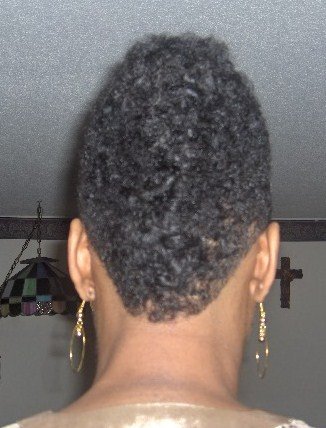
Janet Jackson- Au’Naturale??

HEADLINES
” Janet cut her hair ” , “Janet shaved her head”

….. errrrr……. SHE TOOK HER WEAVE OUT!!!!!!!! .
I can see where some tapering and edging was done- BUT she didn’t do the bc ( big chop)- she let go of her infamous long flowing weave.. She isn’t rocking this short crop gelled back boyish style. My two cents-If you re gonna wear a natural- ROCK IT!!!!!! I see a haute faux hawk, straw set, spikes on the top, soft waves on the side, some kind of hair accessories ( funky flower, decorative pin) or go a little shorter and rock it low and tight- BUT please don’t dis respect the natural by just slicking your hair back appearing as if you just didn’t know what else to do.. 😮

Tell Me: What do you think of Jackson’s shorter look?

au naturale, homemade hair care, license, miss sixx, natural hair, north Carolina, training hours

Natural Hair Regulated in North Carolina

During the last session of the North Carolina General Assembly a bill was passed and signed into law by Governor Bev Perdue to create a new licensure for natural hair care specialists. This new license will require 300 hours of training at an approved cosmetic art/natural hair care school. Once the law goes into effect July 1, 2010 current natural hair care practitioners will have 1 year to obtain licensure by passing the state board examination developed by NIC, the Board’s testing provider. Natural hair care salons will also be required to become licensed within the year. The Board and its committees are hard at work developing curriculum and regulations to guide this portion of the cosmetic art industry. Many experts in the area of natural hair care have volunteered time to service for the Board and have participated in early planning sessions to help ensure a solid foundation is established for this soon to be regulated licensure class.

http://www.nccosmeticarts.com/

Do you see it has a good or bad thing?

au naturale, loc maintenance, loc styles, loc's, miss sixx, youtube

My Attempt at a basket Up Do- Yikes!!!!


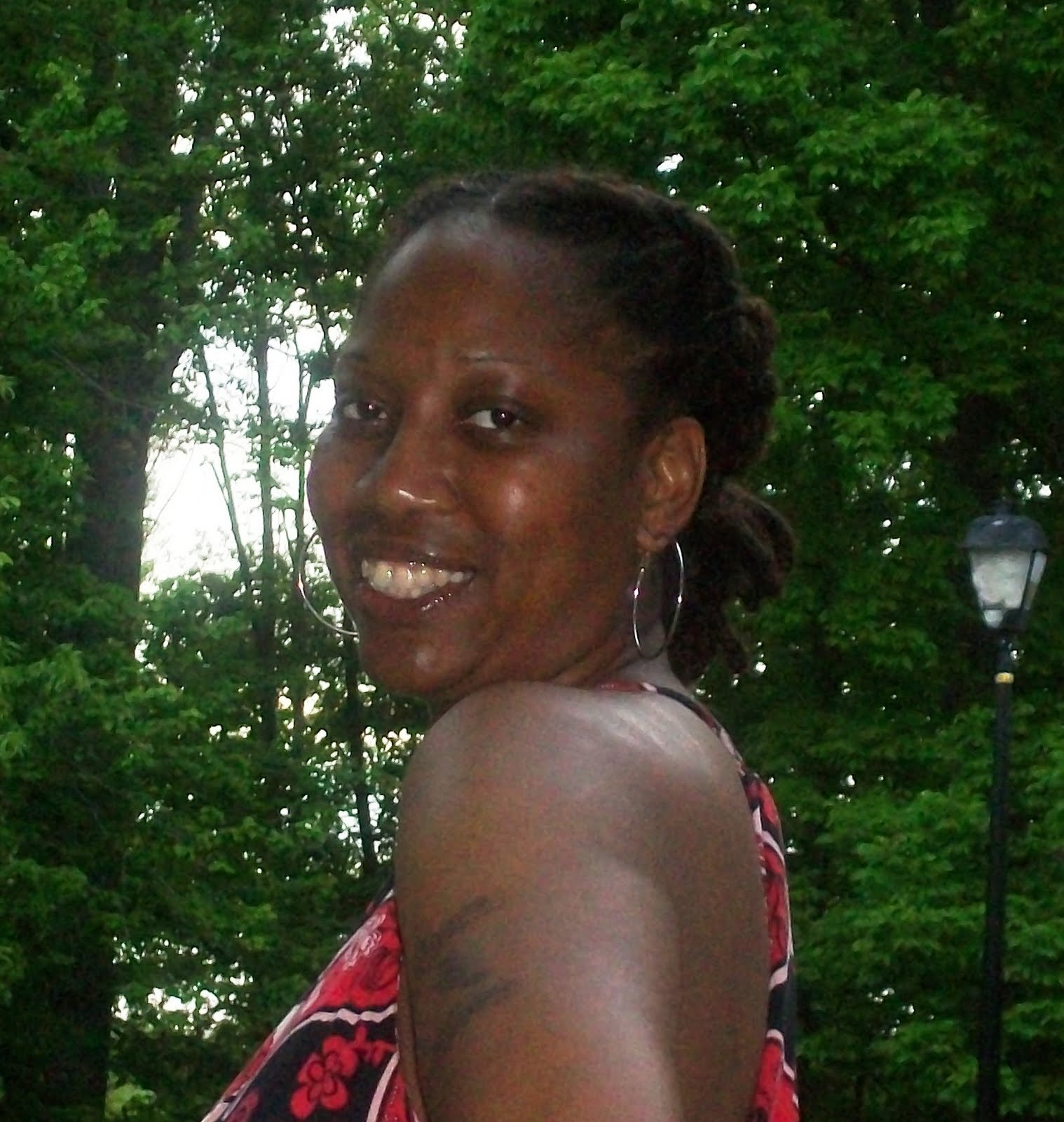
I’m determined to learn how to “style” my loc’s. I’m getting bored with the “same ole same ole” look of rocking a pony tail from day to day. I’m not ready to folk over mad cash to go to a stylist for an up do-so Ive been stalking You Tube for the past 2 weeks. Let me tell ya-them chicas are bad (Fauren, Golden Goddess,Chelsea locs, and DC Church Girl- are my favorites- they demonstrate REALLY slow for us challenged individuals)- LOVE IT! They make trying new styles seem easy, quick, and effortless. This is my latest attempt at a basket up do- I did it 5 times Sunday night- and this is the best out of 5 attempts.. I didn’t like it too much- but my arms were so sore I didnt have the energy to do something else. I created this style using, Lemongrass Spritz (Distilled water, EVOO, Lemongrass EO), jumbo hair pins and two-strand twist on one side. Take a look..Leave a comment *Be Nice* lol..lol..

BTW: I’m on a NO TWISTING DIET- its killing me softly..I was twisting way too much, and I was too obsessed with the “neat-freshly-twisted look”. I’m learning to let them do what they do, and appreciate the look and texture of my loc’s. ** cheering to my inner self- you can do this.. you can do it**
leave a comment-

au naturale, bob Marley, cultivated locs, dreads, free form locs, freeform locs, lil wayne, loc's, miss naturale, miss sixx, organic Locs

LOCS OR DREADS… WHICH IS CORRECT?

How many times have you heard, “I like your dreads”, and cringed by the implication of what ‘dreads’ means to you. I do not mind, but many cultivated loc wearers do. The terms locs and dreads are often used interchangeably, as they both refer to ropes of matted hair. There is however, a distinct difference between the two. The following descriptions are intended to help you distinguish between the terms.

Organic Locs

Organic locs are more widely referred to as dreads or dreadlocks and are formed as the name implies – organically. The hair is washed regularly, but not combed, allowing the hair to mat with no interference. This typically results in thick locs of different shapes and sizes – these are the locs most often associated with interchangeably. Example: Bob Marley

Freeform Locs

Freeform locs are similar to organic locs in that they aren’t “tightened” or “maintained.” However, freeform locs are cultivated to a degree, as the hair is separated (not parted, just pulled apart in “chunks”) into fairly uniform sections after washing. There is no parting, palm rolling, twisting, or latching. Example: Lil Wayne

Cultivated Locs

Cultivated locs are more widely referred to as locs and are formed using various methods. What sets them apart from organic locs and freeform locs is that they are parted into sections of about equal size and regularly maintained, using one of several methods to tighten the new growth. Cultivated locs are usually relatively neat and uniform in appearance. Example: Miss Sixx

Types of cultivated locs include:

Traditional locs
BradeLocz
Nappy Locs
Sisterlocks(tm)

Source: http://www.loclovers.com/Types-of-Locs/1

au naturale, goody spin pin, loc maintenance, loc styles, loc's, miss sixx, natural hair styles, straight hair, styling products, thick hair

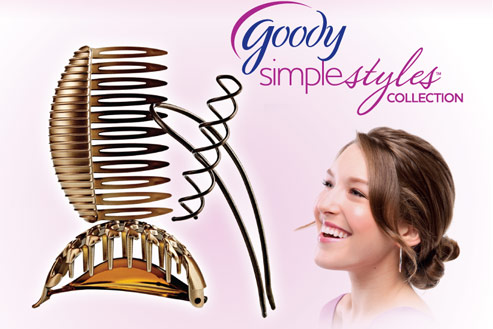
Goody Spin Pin


I keep seeing the commerical the Spin Pin and I’m so courteous. Now in the commercial I saw one AA female with thicker hair, but it was straight. I’m wondering if this will work on us with natural thick hair when it’s not straightened… what about loc’s, sisterlocs, or braided updo’s(ummmmmm… *baffled*). I love the fact that you can use it and it is like using 20 bobby pins. I hate using bobby pins,they hurt my scalp…so this would be super helpful. You can get the entire set below for 14.99 plus shipping and handling. I’m only interested in the spin pin. They sell them individually at CVS, Target and Walgreens. I’m confused at how it would work…I’m pretty sure it would get stuck in my loc’d hair. Have any of you tried this??

au naturale, blowout, curling iron, dominican salon, miss sixx, roundhairbrush.com

Hair Wars: Dominican Salons VS. Traditional Salons


Article Courtesy of Wall Street Journal

The Wall Street Journal ran an interesting piece about the competition black hair salons are experiencing from Dominican salons.

Armed with a blow dryer and brush, deft wrist action and shrewd promotional tactics, immigrants from the Dominican Republic are snipping away market share from African-American stylists whose mastery of black women’s hair ensured for generations that their customers wouldn’t, or couldn’t, leave them. Promises of seemingly healthier hair, swifter service and far lower prices are wooing away a growing number of black women.

The defections have infuriated African-American stylists who insist that their methods are safe and that they are more highly trained than the Dominicans are. “It’s hard enough in these times, but they are undercutting our prices, even passing out fliers to our own clients,” complains Atlanta hairdresser Jannifer Jackson, whose cancellations and no-shows began piling up once a Dominican salon opened about a mile away last summer.

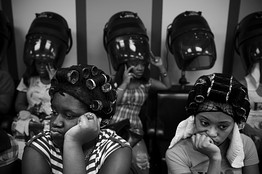
Many traditional black stylists accuse Dominicans of misrepresenting their services as “natural” because nearly all Dominican salons perform relaxer touch-ups. Traditionalists say the “Dominican blowout” technique can cause severe hair breakage. Both sorts of stylists wash, set hair in rollers and seat customers under big dryers.

African-American stylists typically use a curling iron to unfurl the hair, while Dominicans use a two-handed method of unraveling the strands with a round brush, followed by a blow dryer in the other hand to smooth the curl to a straight finish. Dominicans do so by pulling from the hair root, often forcefully. That, along with applying the second round of intense heat, leads to breakage, say black stylists and some customers.

Dominican stylists deny the accusations. The majority of Dominicans are themselves black, and like African-Americans, they developed their skills by styling their own hair. “We have stylists—black stylists—all the time calling and asking to come and train with us,” boasts Alfredo Rhoden, co-owner of Dominican Hair Salon by Massiel in suburban Atlanta.

The financial impact of the Dominican incursion on black American salons is hard to gauge. Sales volume isn’t tracked by the race or ethnicity of salon owners. But industry experts, salon owners and stylists say the impact is indisputable. A fixture in New York City since the 1980s, Dominicans now are rapidly expanding to other U.S. cities.

New Jersey stylist and barber Gina Brydie formed the National Black Cosmetology Association last year to help salon owners strengthen their businesses against the recession and the increasing Dominican competition.

“We have Asians coming in with the beauty supplies and Dominicans coming in and taking over our industry,” says Ms. Brydie, 39 years old and 20 years in the business. Salons and barber shops are a proud touchstone for blacks in part because they were among the earliest black-owned businesses, providing one of few paths to economic advancement after slavery. By the early 1900s, black entrepreneur Madame C.J. Walker had become a self-made millionaire by making hair and beauty products for blacks.

Now, rather than trying to beat the Dominicans, some African-American business owners are joining them. Jennifer Drew started RoundBrushHair.com in 2007 to help Dominican salons market to blacks after she switched to the blowout and saw curiosity budding among black women.

The RoundBrushHair.com database has grown to include several hundred Dominican salons, from Sun Valley, Calif., to Chicago to Boston. Almost all opened in the past five years, Ms. Drew says. It includes 80 salons in metropolitan Washington, 95 in Georgia, 15 in Charlotte, N.C., and seven in Houston.

We can see why the black hair care providers are up in arms about losing customers, especially in this economy, but at the same time the competition is GREAT for the clients. It’s hard walking in a black salon without losing your purse — so it’s good to know there is a less expensive alternative. Plus, we’ve experienced how much faster you can get in and out of a Dominican salon. At the same time, is there anything that can compare to that old familiar feeling of slipping into the chair of the stylist who has been doing your hair for years? The community feel of a black salon is another bonus that can’t be matched elsewhere.

Have you abandoned your regular stylist for a Dominican spot? Do you think that the Dominican blowout is less damaging than a curling iron or flat iron? Please leave a comment!

aloe vera, au naturale, avocado oil, blacksoap, co-wash, cultivated locs, ecostyler, kellee Tolbert, mositure, natural, natural hair, natural hair styles, soybean oil, vegatable glycerin, vo5, water

Interview: Loc Take Down W/ Kellee Tolbert


What’s your name and where are you from?
Kellee Tolbert, grew up in Glen Burnie, MD. But I live in Baltimore Now

How long were you loc’d before you decided to take them down?
3 years

Why did you choose to take your loc’s down?
I wanted a change. My locs were not healthy; I had little knowledge about how to care for them at the time. Also, I was not able to do my own hair and it was getting expensive going to the salon just to get a style

What method did you use to remove your locs? Products?
Just a rat-tooth comb, with the metal end and some VO5 conditioner

What has been the reaction of your family and friends since removing your loc’s?
My husband has been very supportive of my natural journey. My mother in the opposite and wishes that I would relax my hair. She was not in favor of the locs either.

What styles do you love to wear the most and why? How do you go about achieving this style?
I like when my hair looks wild and big. I achieve this by twist outs and braid outs

How do you detangle your hair?
I find that detangling before I wash works best for me. I just spray a glycerin/water mixture and take sections with a wide tooth comb and get to work

How do you maintain length? Moisture?
I don’t really worry about length, because there is a lot of shrinkage. Moisture was a big problem for me. I now have the correct mixture of shea butter that works for my hair. I also do a mayo/egg conditioner.. sometimes I add an avocado. It has been working very well for my hair.

How do you protect your curls at night?
If I have a twist out.. I re-twist with shea butter and put my satin cap on

Name a few challenges you are currently facing with your hair. Have you been doing anything different to overcome these challenges?
Right now I am trying to get my hair to grow in the places that were broken off from the locs. Just keeping moisture has been working.

List the products that you use and how you use them. What is your current hair regimen? share what works for you!
I make my own she butter hair cream recently added Soybean oil and Avocado Oil and I have noticed a significant difference in the moisture and shine. For quick styling in the morning I use coconut oil. To wash I use Blacksoap shampoo ( only when I have product in my hair ie. gel ( Ecostyler or aloe gel) Or I just use VO5 with oils added for co-washing. Glycerin/water mix to hydrate curls.

Do you have any advice for other naturals?
Being Natural has more to do with just hair. It is mental! You have to be extremely comfortable with yourself to live outside of society norms. It took me a while to understand this and it is not for everyone. Everyone has their own journey.

Where on the web can we find more about you and your styles?
No website. But maybe in the future I would like to do natural hair consulting; especially for children. Children of bi-racial and adoptive parents. There is a lot of knowledge that needs to be shared. Education is always the key.

au naturale, circulation, color treatment, dandruff, dryness, hair growth, hair steamer, hair treatment, healthy, miss sixx, Moisture, skin cleansing

Hair Steaming

I had a customer ask me my opinion on hair steamers today. I had never heard of this, nor was I aware that there was such a product called a ” hair steamer”. Needless to say I was very interested to learn more about hair steaming.

Here’s some information on what a steamer does for your hair.It is basically like a Sauna for your scalp and has many benefits for your scalp and hair including

Benefits

Better Circulation in Scalp leading to better hair growth

– Cleanses Scalp, removing dirt and dead skin

– Brings moisture to your Roots and hair shaft

– Leaves your hair soft and smooth

– Great for Dandruff Sufferer’s

– Stops Dryness and hair Breakage

– Makes hair stronger and healthier

– Improves Hair Color Treatments

– Can also act as a Facial Steamer

The reason why a hair steamers are so great for hair treatment is that it will improve circulation with the steam and the heat will then open up your follicles and hair shaft cuticles and this allows moisture as well as your hair treatment product to enter the hair shaft.

The steamer is then set on a cooler setting towards the end of the hair treatment and this then closes the cuticles and hair shaft and locks in all that deep hair treatment product. Giving your great long lasting benefit as well as using natural
h20 to bring moisture to your hair and scalp

How long and often should it be used?

This is a very common question and if very specific to the type of hair treatment you are doing and the level of damage your hair has.

Generally people steam there hair no more than 2 times in a week for about 20 to 30 minutes to get the full benefit from it. Some sessions can go over and hour for more damaged hair.

After your hair steamer treatment you hair will feel a little heavier and full of moisture, during this time handle your hair with care , wait till your hair and scalp have cooled down until styling.

Damaged Hair – Increase Temperature Decrease Steam if possible

Chemicals or Color Treatment – Skip cooling step

Have any of you ever tried hair steaming? Please share your stories…